



Belgian Gaming Commission blacklist keeps growing with 28 illegal sites added in april 2026
The Belgian Gaming Commission blacklist has grown again. This latest update is substantial. The regulator has added 28 more illegal gambling websites in one wave. That makes this more than a routine list refresh.
The move matters for Belgium. It matters for players too. Blacklist updates show where the pressure still sits. They also show how often illegal operators keep returning.
This time, the warning is clear. Several domains look built to imitate known brands. Others look generic, disposable, or rushed. Together, they show how easily illegal gambling sites can mimic trust.
A large blacklist update in April 2026
The latest blacklist decision dates from 2 April 2026. It was published a few days later. On the regulator’s list, the relevant block runs from entry 832 to entry 859. That equals 28 newly added domains.
That is a notable number. It is not a cosmetic update. It is a sizeable enforcement wave. For anyone watching the sector, the volume stands out immediately.
Some of the names are especially revealing. The list includes starcasino-belgium.com, starcasinobe.com, starcasino-nl.com, and star-casinos.fr. It also includes dragonia.com and dragonia-4531.com. These are not random details. They show how blacklisted sites often chase recognition or quick clicks.
Many illegal domains work like that. They borrow familiar language. They imitate local cues. They use names that sound plausible at first glance. That is often enough to catch inattentive visitors.
Why this matters in Belgium
Belgium does not use a loose gambling model. The legal starting point is strict. Gambling is prohibited unless it is expressly authorised. A site therefore needs the proper Belgian status before it can legally target local players.
That point is central. A gambling website is not legal in Belgium just because it loads quickly or accepts registrations. It needs to fit the Belgian framework overseen by the regulator. If it does not, appearance means very little.
This is why the blacklist matters. It gives the public a visible signal. It also gives the market a practical warning. When new domains are added, the regulator is saying that these websites do not belong inside the legal channel.
Fake brand signals are a major concern
The copycat angle is one of the strongest parts of this story. Some of the latest domains clearly lean on the image of known names. That makes the blacklist update more important than a simple legal notice.
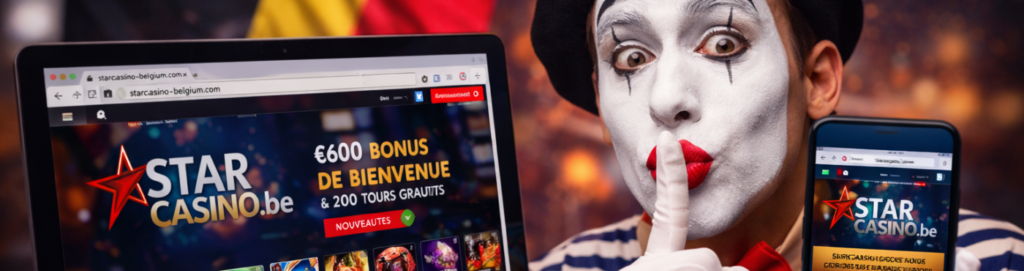
Take the Star Casino style domains. The regulator’s legal operator lists still show StarCasino.be as an authorised Belgian online casino brand. That makes lookalike domains especially problematic. They can exploit existing trust without sharing the legal status behind it.
This is where many users make mistakes. They recognise a familiar word. They assume the rest is fine. They focus on the logo, not the exact address. That shortcut can lead them straight to an illegal site.
A small domain change can matter a lot. One extra word can matter. A different extension can matter. A regional-looking variation can matter. In the current Belgian market, those details are not cosmetic.
The same pattern has also appeared around SCOOORE-style domains. Earlier in 2026, the regulator added scooore-casino.com, scooorecasino.com, and scooorecasino.net to the blacklist. That shows the issue is broader than one brand family. It is a repeated tactic.
The blacklist is part of a wider enforcement system
The blacklist is not just a public page. It sits inside a broader enforcement structure. That structure has become stronger in recent months. Belgium has been adding faster domain-level tools to support the older blacklist system.
A key step came in December 2025. The Gaming Commission and DNS Belgium signed a cooperation agreement. The purpose was clear. It was designed to make action against illegal .be gambling domains quicker and more direct.
Under that process, the regulator can report domains more efficiently. DNS Belgium can then act faster. Visitors may be redirected to an official warning page. That gives enforcement a more practical edge.
This does not solve everything. Illegal operators can still switch domains. They can still clone designs. They can still reappear under fresh names. Even so, faster disruption matters because speed is one of their main advantages.
Why illegal sites keep finding room
The latest blacklist wave shows that the problem has not faded. If 28 domains can still be added at once, the illegal offer is still active. It is still adapting. It is still trying to reach Belgian traffic.
That should not surprise anyone. Illegal sites do not need to build lasting reputations. They often work in short cycles. They launch quickly, copy what already works, and move on once pressure rises.
This model creates several risks. The first is basic confusion. The second is weaker protection. The third is uncertainty when something goes wrong. A site can look polished and still sit completely outside the Belgian system.
That is why branding tricks matter. They are not just annoying. They serve a purpose. They help illegal operators look safer than they are. In a market where legal access depends on exact status, that is a serious issue.
What players should check first
The safest starting point is simple. Check the legal Belgian lists first. Do not rely on search impressions alone. Do not trust a familiar brand word on its own.
The exact domain is critical. That is one of the clearest lessons from the current blacklist update. A legal name and an illegal domain can sit very close together. At a glance, they may even seem identical.
Players should also watch for weak signals. Strange number strings are one warning sign. Mirror-brand wording is another. Confusing domain extensions should also raise questions. So should vague operator identity.
The latest additions make this practical point very clear. Several of the new domains look designed to appear local or familiar. That appearance is part of the trap. It is not evidence of legal status.
What this says about the Belgian market
This blacklist wave says something important about the wider market. Belgium’s legal framework is structured and well defined. Yet illegal operators still see value in targeting Belgian players. That is why domain churn remains so visible.
The contrast is sharp. Legal operators work inside a clearly supervised framework. Illegal domains try to harvest the visibility of that framework without accepting its rules. They want the trust signal, not the obligations.
That is why the regulator’s blacklist remains useful. It is not just a defensive document. It is also a live market indicator. When the list grows in large waves, it shows where enforcement pressure is being applied and why.
The latest update sends two messages. One is aimed at operators. Enforcement is still active. The other is aimed at players. Familiar branding is never enough.
Why this story deserves attention now
Some regulatory updates pass quietly. This one should not. Twenty-eight new additions in a single move is a strong reminder that illegal supply remains persistent. It also shows how brand imitation continues to be used as a traffic tool.
There is a practical lesson here. People should not judge a gambling website by tone, design, or logo alone. They should judge it by the exact domain and its legal standing in Belgium. That is the safer habit.
The Belgian Gaming Commission blacklist is therefore doing two jobs at once. It restricts visibility for illegal sites. It also teaches users what to doubt. In the current environment, both functions matter.
Conclusion
The Belgian Gaming Commission blacklist has expanded again, and the latest wave is significant. Twenty-eight more illegal gambling sites have been added in one decision. Several of those domains appear built to exploit familiar branding or local-looking trust signals.
That makes the message straightforward. Check the exact domain. Check the legal status. Do not trust surface familiarity. In Belgium’s gambling market, those simple steps can make the difference between a licensed site and a blacklisted one.
For the sector, this update is a warning sign. For players, it is a practical reminder. Illegal sites still adapt quickly, and the blacklist remains one of the clearest tools for spotting that reality

No responses yet