


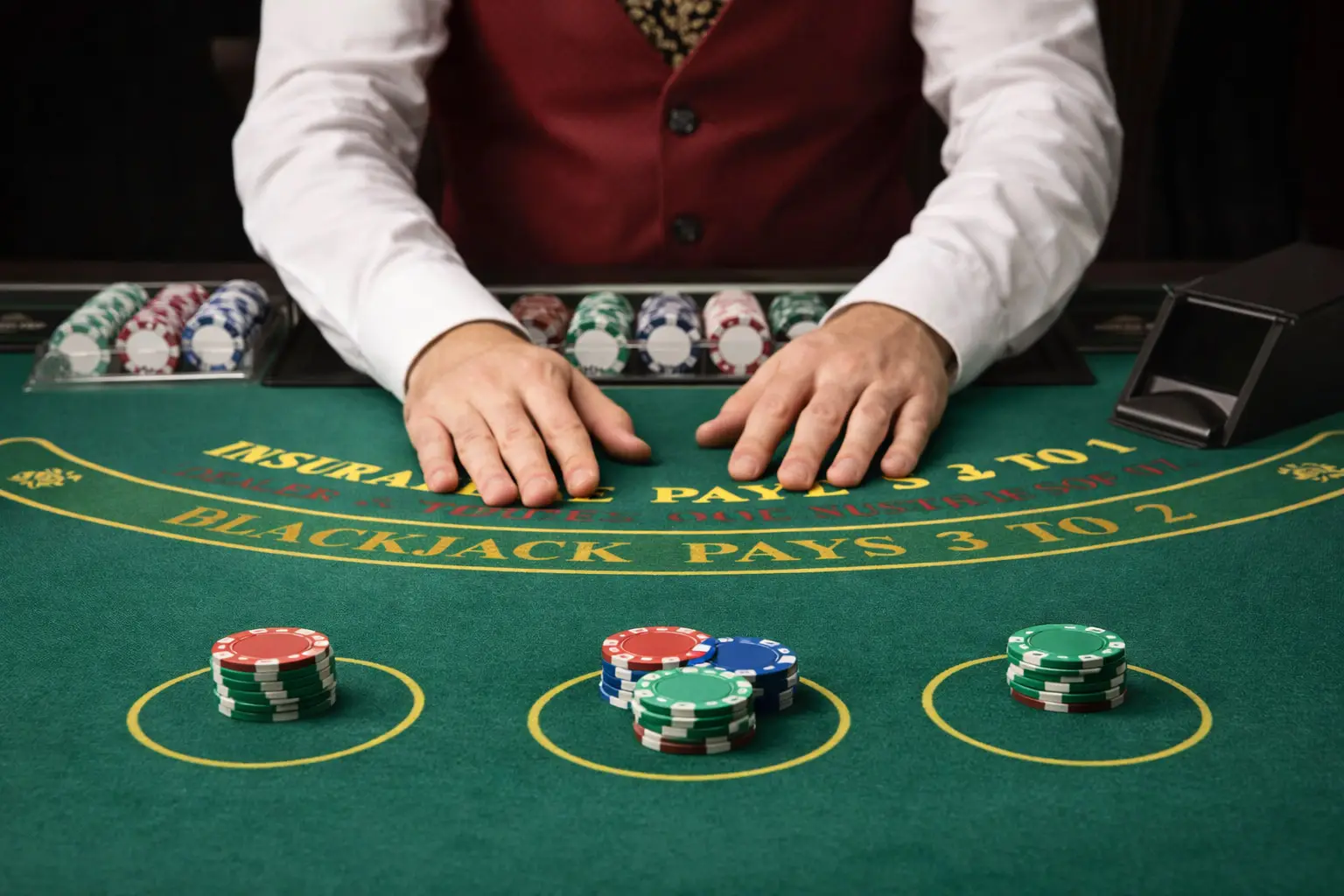
Blackjack is one of the most popular casino games in the world. Unlike many games of chance, it is based on a subtle balance between probability, mathematics, and decision-making. When played correctly, it offers one of the lowest house edges in the casino. When played poorly, it can quickly become a trap. Understanding the rules, adopting a consistent strategy, and knowing when to act or refrain are the pillars of improving long-term performance.
This article provides a comprehensive analysis of the key factors that help maximize your chances at blackjack, with a focus on crucial decisions: hitting or standing, doubling down, splitting, managing probabilities, and avoiding the most common mistakes.
Understanding the True Objective of Blackjack
The goal of blackjack is not simply to reach 21, but to beat the dealer’s hand without exceeding 21. This nuance is fundamental. Many optimal decisions are not aimed at improving your own hand, but at reducing the dealer’s chances of winning.
The dealer follows fixed rules:
- The dealer draws until 16 or less
- The dealer stands on 17 (often even on a “soft 17”)
The player, however, has freedom of decision. When used correctly, this freedom is what reduces the casino’s edge.
Basic Strategy: The Foundation of Success
Basic strategy is a table of mathematically optimal decisions, calculated using millions of simulations. It indicates, for every possible combination of the player’s hand and the dealer’s upcard, the action that maximizes expected value.
Why it is essential
- It reduces the house edge to less than 1%
- It eliminates emotional decision-making
- It applies to all classic blackjack variants
Ignoring basic strategy means playing against the odds.
When to Hit or Stand: Crucial Decisions
Standing
It is generally recommended to stand when:
- Your total is 17 or higher
- You have 13 to 16 and the dealer shows a weak card (2 to 6)
In these situations, the main risk comes from the dealer, who may bust. Hitting would be statistically unfavorable.
Hitting
It is preferable to hit when:
- Your hand totals 11 or less
- You have 12 to 16 and the dealer shows a strong card (7 through Ace)
Here, the probability that the dealer will make a solid hand is high. Not hitting exposes you to a near-certain loss.
Understanding “Soft Hands” and “Hard Hands” in Blackjack
A soft hand contains an Ace counted as 11 (e.g., Ace + 6 = soft 17).
A hard hand does not have this flexibility.
Soft hands allow for more aggressive play:
- Hitting on a soft 17 is often recommended
- Doubling down may be advised with soft 13 to 18, depending on the dealer’s card
The Ace acts as a risk buffer, reducing the probability of busting.
When to Double Down: Maximizing the Value of a Strong Hand
Doubling down means doubling your bet in exchange for receiving only one additional card. It is a powerful move, but one that should be used only in very specific situations.
Doubling down is recommended when:
- You have 11, regardless of the dealer’s card (with rare exceptions)
- You have 10 against a dealer upcard of 9 or lower
- You have 9 against a dealer showing 3 to 6
- You hold certain soft hands (Ace + 7, Ace + 6) against weak dealer cards
Doubling down is mathematically justified when the probability of significantly improving your hand is high.
Splitting Pairs: A Strategic Decision
When you are dealt two identical cards, you may split them into two separate hands.
Always split
- Aces: not splitting is a major mistake
- Eights: even against a 10 or an Ace
Never split
- Tens: this is already a very strong hand
- Fives: doubling down is better than splitting
Split depending on the situation
- Twos, threes, sixes, and sevens depending on the dealer’s upcard
Splitting increases your chances of turning an average situation into two favorable opportunities.
Predicting Bust Risk in Blackjack
Knowing when a hand is dangerous is essential.
Examples of bust probabilities
- Hitting on 12: about a 31% chance of busting
- Hitting on 16: more than a 60% chance
- Hitting on 11: 0% chance
However, these numbers must be considered alongside the dealer’s upcard. Sometimes, accepting a higher risk is better than a near-certain loss.
Bet Management: Stability and Discipline
Even with a perfect strategy, variance is unavoidable. Good bankroll management is based on:
- Consistent bet sizing
- Avoiding aggressive progression after a loss
- Setting clear limits
Blackjack rewards consistency far more than attempts at rapid recovery.
Common Blackjack Mistakes to Avoid at All Costs
- Playing by intuition instead of strategy
- Always hitting on 16 without considering the dealer’s card
- Refusing to double down out of fear of losing more
- Splitting tens
- Ignoring the difference between soft and hard hands
These mistakes significantly increase the casino’s edge.
Card Counting: Myth and Reality
Card counting is a legal but complex technique that requires:
- Constant concentration
- Excellent memory
- Flawless discipline
In practice, most players improve their results far more by mastering basic strategy perfectly than by attempting card counting without proper preparation.
Conclusion: Mastery Over Luck
Blackjack is a game where every decision matters. Maximizing your chances depends on understanding probabilities, rigorously applying basic strategy, and maintaining disciplined bankroll management. The goal is not to defeat randomness, but to reduce mistakes and play each hand optimally.
With method, consistency, and clarity, blackjack becomes a game of skill and reflection where real improvement is possible.
No responses yet